
On this page
- Solar EV Charging at a Glance
- What Is Solar EV Charging?
- How Does Solar EV Charging Work Exactly?
- Types of Solar EV Charging Setups
- System Size, Charging Speed, and Realistic Expectations
- Costs and Financial Benefits of Solar EV Charging
- Environmental Benefits of Charging an EV With Solar
- Challenges and Limitations of Solar EV Charging
- Solar EV Charging in the Australian Context
- Time to Go Solar
Solar EV Charging is one of the most effective ways to reduce the cost of owning an electric vehicle while making better use of Australia’s abundant sunlight. It allows you to use electricity generated by your solar panels to charge your EV, reducing reliance on the grid and lowering overall running costs.
While the idea of charging an EV using solar power sounds straightforward, the reality is more nuanced. Performance, savings and reliability depend on your system's design, the technology used and how it fits your home's wiring. As EV charging specialists, we see that the best results come from properly planned, compliant installations built around each home.
This guide explains how solar EV charging works in real-world Australian conditions, what you need to consider before installing a solar EV charging station, and how to get the most value from charging your EV with solar panels at home.
Solar EV Charging at a Glance
- Solar EV Charging uses rooftop solar energy to partially or fully power an electric vehicle.
- Smart chargers help maximise solar usage and minimise grid reliance.
- Battery storage is optional but increases charging flexibility.
- Charging an EV with solar panels is more cost-effective than plugging into the grid.

What Is Solar EV Charging?
Solar EV Charging refers to using electricity generated by a rooftop solar system to power an electric vehicle. Instead of drawing all charging energy from the grid, your EV can use solar energy produced during the day, either partially or entirely, depending on system size and setup.
How Does Solar EV Charging Work Exactly?
It’s important to understand that EVs cannot be charged directly from solar panels alone. Solar panels produce direct current (DC), while EV chargers require alternating current (AC). This energy accumulated by the solar panels flows to an inverter, which converts it into AC power suitable for household use. Once converted, the electricity is distributed through your switchboard to power appliances, lighting, and EV charging equipment.
When charging your EV with solar, the EV charger is considered another load within the home. The key difference is how intelligently that load is managed, which is where system design plays a crucial role.
In a typical setup, solar powers the home first, and any spare solar can go to the car. With a standard charger, or a smart charger in grid-assist mode, the grid makes up any shortfall so the car keeps charging. In solar-only mode the charger slows to match the spare solar, and pauses when too little is spare.
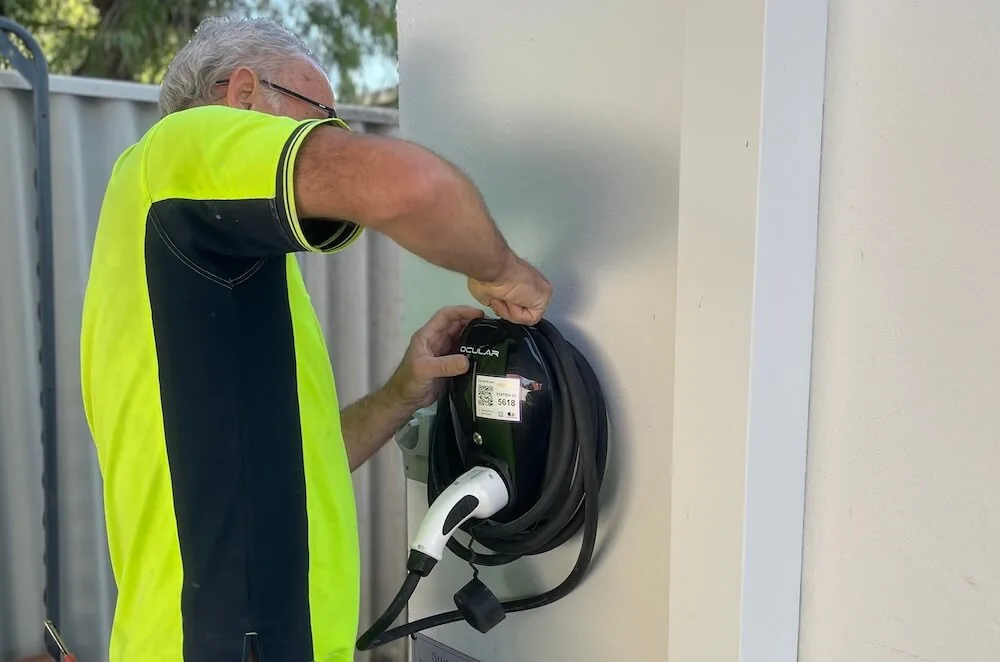
One of the EV Chargers we’ve installed, and continuously recommend, in Australian homes is the Ocular IQ Home Solar.
We also install other solar-aware chargers: the myenergi Zappi, the Fronius Wattpilot from the solar inverter maker Fronius, and the Evnex E2.
Smart EV Charging and Load Management
Modern EV chargers can be configured to prioritise solar energy. Most do it with CT clamps, small sensors clipped around the main cables where your home connects to the grid, or with a compatible meter. These show whether the home is drawing from the grid or sending solar out, and the charger speeds up or slows down to match.
An EV won't charge below about 6 amps, roughly 1.4kW, on one phase, meaning one of the supply lines into your home. A kW, or kilowatt, is how much power is flowing at any moment. In solar-only mode the charger waits until that much solar is spare, so it can stop and start as appliances switch on and off.
Load management is also essential for safety and compliance. Your electrical system must balance EV charging with other household loads to avoid overloading circuits. Professionally installed systems ensure your solar EV charging station operates safely while maintaining power to the rest of the home.
Using Battery Storage With Solar EV Charging
Battery storage is optional but can enhance flexibility. A home battery stores excess solar energy generated during the day, allowing your EV to be charged later in the evening or overnight. While batteries add upfront cost, they can improve independence from the grid and increase the usable portion of your solar generation.
Whether a home battery makes sense depends on several practical considerations:
- Typical driving distance and charging frequency.
- Whether the vehicle is usually parked at home during the day.
- Household electricity usage outside daylight hours.
Types of Solar EV Charging Setups
There is no single approach to solar EV charging that suits every household. The right setup depends on how much solar energy you generate, when you typically charge your vehicle, and how much control you want over energy use.
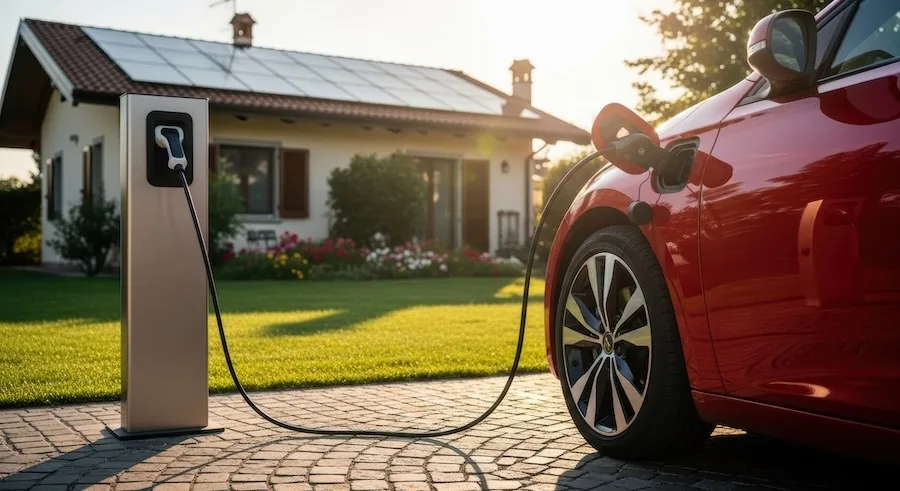
The most common configuration is a standard rooftop solar system paired with an EV charger. In this setup, your home uses solar first, spare solar goes to the car, and the grid covers the rest. This approach works well for households where the EV is parked at home during the day and can take advantage of solar generation.
A more advanced option is pairing solar with a smart EV charger, which watches your spare solar and adjusts its charging rate in real time. In solar-only mode the car only draws spare solar, and in grid-assist mode it uses spare solar first and tops up from the grid to keep charging.
A smart charger like this suits a home that wants to use as much of its own solar as it can without adding a battery.
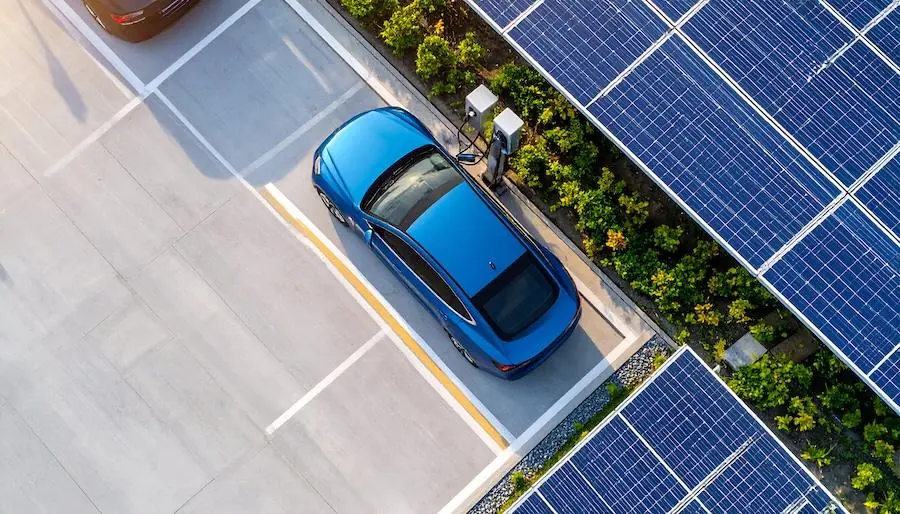
The most complete setup combines solar panels, a battery and an EV charger. Spare solar is stored in the battery and used to charge the car once the sun goes down. This setup gives the most flexibility, but it costs more upfront and should be weighed against how you use power and drive.
Comparison of Common Solar EV Charging Setups
| Setup Type | How It Works | Best Suited For | Key Considerations |
|---|---|---|---|
| Solar + Standard EV Charger | Uses solar when available, grid fills gaps | Daytime home charging | Still uses solar, but can't control how much |
| Solar + Smart EV Charger in Solar-Only Mode | Adjusts charging to match spare solar | Maximising solar self-consumption | Higher upfront charger cost, and charging can stop and start when spare solar is low |
| Solar + Smart EV Charger in Grid-Assist Mode | Uses spare solar first, tops up from the grid | Steady charging that still favours solar | Some grid power is used |
| Solar + Battery + EV Charger | Stores solar for later EV charging | Evening or overnight charging | Higher system cost |
System Size, Charging Speed, and Realistic Expectations
One of the most common misunderstandings about home solar EV charging is how much energy a system can realistically provide. EVs require a significant amount of electricity compared to typical household appliances, which means system capacity matters.
Your inverter, the box that turns the panels' power into household power, often sets the limit. A common older setup is 6.6kW of panels on a 5kW inverter. With the house using 2kW, about 3kW is left for the car, so a 7kW charger can't run on solar alone, even on a perfect day.
To see what your own system leaves for the car, try the calculator in Can You Really Charge an EV From Solar?
A standard residential solar system can support modest daily charging, particularly for commuters with average driving distances. However, charging speed will vary throughout the day as solar output rises and falls. On many older systems, full-power charging isn't possible from solar alone, even in peak sunlight, so the grid or a battery makes up the rest.
Expectations also need to be aligned with daily driving habits. Drivers covering short to moderate distances often find that charging EVs with solar panels easily meets their needs. Those with higher mileage or limited daytime charging windows may require grid support or a larger solar system to maintain convenience.
Seasonal changes play a role as well. Solar output is higher in summer and lower in winter, which can affect charging availability. Well-designed systems account for these fluctuations to ensure reliable year-round performance.
Three-Phase Homes and WA Export Limits
Three-phase homes, with three supply lines sharing the load, need more care. A car charging on three phases needs the minimum rate on each phase, and a single-phase car only uses one of them, so the car, inverter, charger and phases need to be looked at together.
An export limit caps how much spare solar your home can send to the grid, and in WA it isn't a flat 1.5kW per phase. Western Power currently sets it for the whole property, measured where the property connects to the network. The limit can depend on your site's approval, your retailer and your system's settings.
Costs and Financial Benefits of Solar EV Charging
The upfront cost of Solar EV Charging depends on several factors. For homes with existing solar, adding just an EV charger is more affordable than installing a complete system from scratch, provided the current setup has sufficient capacity.
Smart EV chargers typically cost more than basic units, but they offer greater control over energy use and can significantly improve the value of charging EVs with solar energy. In some cases, electrical upgrades may also be required to ensure the system complies with Australian standards and can safely manage the additional load.
Despite the initial investment, long-term savings are one of the strongest advantages of EV solar charging. According to the Australian Department of Climate Change, Energy, the Environment & Water, using solar energy instead of grid electricity reduces ongoing charging costs, especially as energy prices continue to rise. Over time, this can translate into thousands of dollars in savings compared to relying solely on the grid or public charging infrastructure.
Solar EV Charging also makes better use of surplus solar generation. With feed-in tariffs remaining low across Australia, directing excess solar power into your vehicle often delivers far greater financial value.
Environmental Benefits of Charging an EV With Solar
One of the key motivations for home solar EV charging is reducing environmental impact. While EVs already produce fewer emissions than traditional petrol or diesel vehicles, charging them with solar energy further lowers their overall carbon footprint.
Using solar-generated electricity reduces reliance on fossil fuel-based power generation and helps align transport with renewable energy sources. This combination significantly cuts emissions associated with daily driving and supports broader sustainability goals.
From a long-term perspective, EV solar charging also contributes to reducing strain on the electricity grid during peak demand periods.
Challenges and Limitations of Solar EV Charging
Although Solar EV Charging offers many benefits, it is not without limitations. Solar generation is variable, meaning charging availability depends on weather conditions and time of day. Without battery storage, most charging occurs during daylight hours, which may not suit all drivers.
Smaller solar energy systems may struggle to meet both household and EV charging demands simultaneously. In these cases, grid electricity still plays an important role in maintaining convenience and reliability.
There is also a risk of underperformance if systems are poorly designed or incorrectly sized. Installing an EV charger to rely on only solar power, without assessing total energy demand, can lead to slow charging speeds or unexpected reliance on the grid. This is why professional assessment and design are essential before proceeding.
Solar EV Charging in the Australian Context
Australia’s high solar potential makes it one of the best places in the world for solar EV charging. Abundant sunlight allows many households to generate enough energy to support daily driving needs, particularly when systems are designed with EV charging in mind.
Low feed-in tariffs further strengthen the case for charging EVs with solar panels at home. Instead of exporting excess energy for minimal returns, homeowners can use that power directly to power their vehicles, improving the overall value of their solar investment.
Australian electrical standards and compliance requirements also play an important role. EV charging systems must be installed correctly to ensure safety, reliability, and long-term performance. Working with experienced professionals ensures your system meets all regulatory requirements while delivering optimal results.
Time to Go Solar
Solar EV charging offers a practical and cost-effective way to power electric vehicles using renewable energy while reducing reliance on the grid. When designed correctly, it allows homeowners to maximise the use of solar generation and lower the cost of EV ownership.
However, performance and savings depend on realistic expectations, appropriate system sizing, and smart charging integration. Factors such as solar output, household energy use, and driving habits all influence how effective charging your EV with solar panels will be in everyday use.
If you are considering EV solar charging at home, the best results come from professional advice and a system designed around your home. Speak with our team today and let’s build the perfect system for your needs.